
Heavy Rain Warning: 7 Areas Every Chilliwack Strata Must Inspect Immediately
The Clear and Present Danger of Fraser Valley Rain
As a Triple Master Certified Restorer with three decades of experience serving strata properties across the Fraser Valley, I'm writing this during an extreme heavy rain event currently impacting Chilliwack, Sardis, and surrounding communities. This is not a drill, and this is not a time for complacency.
Right now, as you read this, water is testing every weak point in your strata building. The soil around your foundation is becoming saturated. Your building's drainage systems are being pushed to their absolute limits. And in many cases across Chilliwack and the Fraser Valley, those systems are already beginning to fail.
The stakes are exceptionally high:
- •A single clogged roof drain can lead to $50,000+ in emergency repairs
- •A failed sump pump can flood an entire parkade in under 2 hours
- •Saturated perimeter drains can compromise your foundation and cause unit displacement
This comprehensive guide provides an expert-level inspection checklist specifically designed for Chilliwack and Fraser Valley strata properties. The goal is simple: help you identify critical vulnerabilities before they become catastrophic failures. Every minute counts during extreme weather, and proactive inspection today can save tens of thousands in emergency restoration costs tomorrow.
If you discover any of the warning signs described below, or if you're already experiencing water intrusion, contact our 24/7 emergency response team immediately. We serve all of Chilliwack, Sardis, and the Fraser Valley.
1. The Obvious Threat: Parkades and Lower Levels
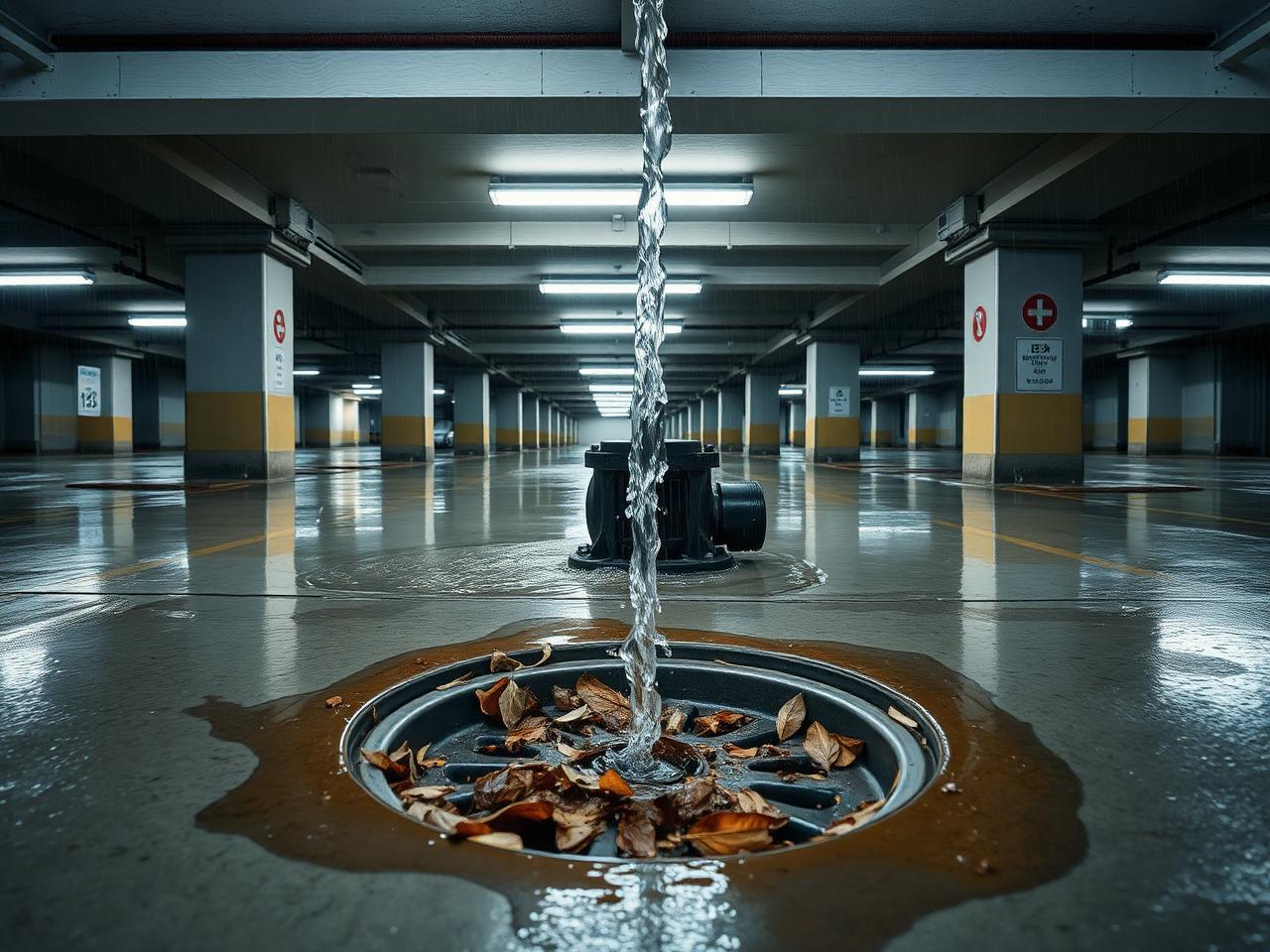
Your parkade is ground zero for heavy rain emergencies. The parkade entrance ramp acts as a massive water funnel, directing hundreds of gallons directly toward your building's lowest level. During extreme rainfall in Chilliwack and the Fraser Valley, this becomes a race between water infiltration and your drainage systems.
Sump Pumps: Your First Line of Defense
Walk down to your parkade right now and listen. Can you hear your sump pump? Here's what you need to know:
✓ Healthy Sump Pump Sounds:
- Rhythmic cycling every 5-15 minutes during heavy rain
- Strong water discharge sound (like a washing machine emptying)
- Brief motor hum followed by water flow, then silence
⚠ Warning Signs of Failure:
- Complete silence: The pump may have lost power or completely failed
- Continuous running without stopping: The pump is overwhelmed or the discharge line is blocked
- Loud grinding or buzzing: Internal pump failure imminent
- Motor starts but no water discharge: Impeller jam or broken coupling
Critical fact for Chilliwack strata managers: Most parkade sump pumps lack battery backup. During a power outage (common during extreme storms), your pump stops working entirely. This is why we see parkade flooding emergencies escalate so rapidly during Fraser Valley storm events.
Parkade Drains (Catch Basins): The Bottleneck
Picture this scenario I've witnessed dozens of times in Chilliwack strata properties: Heavy rain overwhelms the parkade entrance. Water rushes down the ramp like a river. But instead of draining away, it begins pooling because the catch basin is clogged with debris that accumulated over months of neglect.
Within minutes, you have a "waterfall effect" — water cascading over the curb and spreading across the entire parkade floor. Your sump pump, no matter how powerful, cannot keep up with this volume.
Inspect your parkade drains for:
- Leaves, garbage, cigarette butts blocking the grate
- Sediment buildup reducing drain capacity
- Slow drainage (water should disappear within seconds, not minutes)
- Standing water around floor drains
Lowest-Level Units: Ground-Level Vulnerability
Strata units with ground-level patio doors or basement window wells are particularly vulnerable during Chilliwack heavy rain events. If exterior drainage is slow or overwhelmed, water can accumulate against these openings and find its way inside.
Check all ground-level entry points for water pooling. Look for watermarks on patio door frames or basement window wells that show where water has reached during previous storms. This is your warning of what's coming if drainage isn't addressed. Learn more about preventing this type of damage in our Fall Water Damage Checklist.
2. The Top-Down Attack: Roofs, Gutters, and Balconies
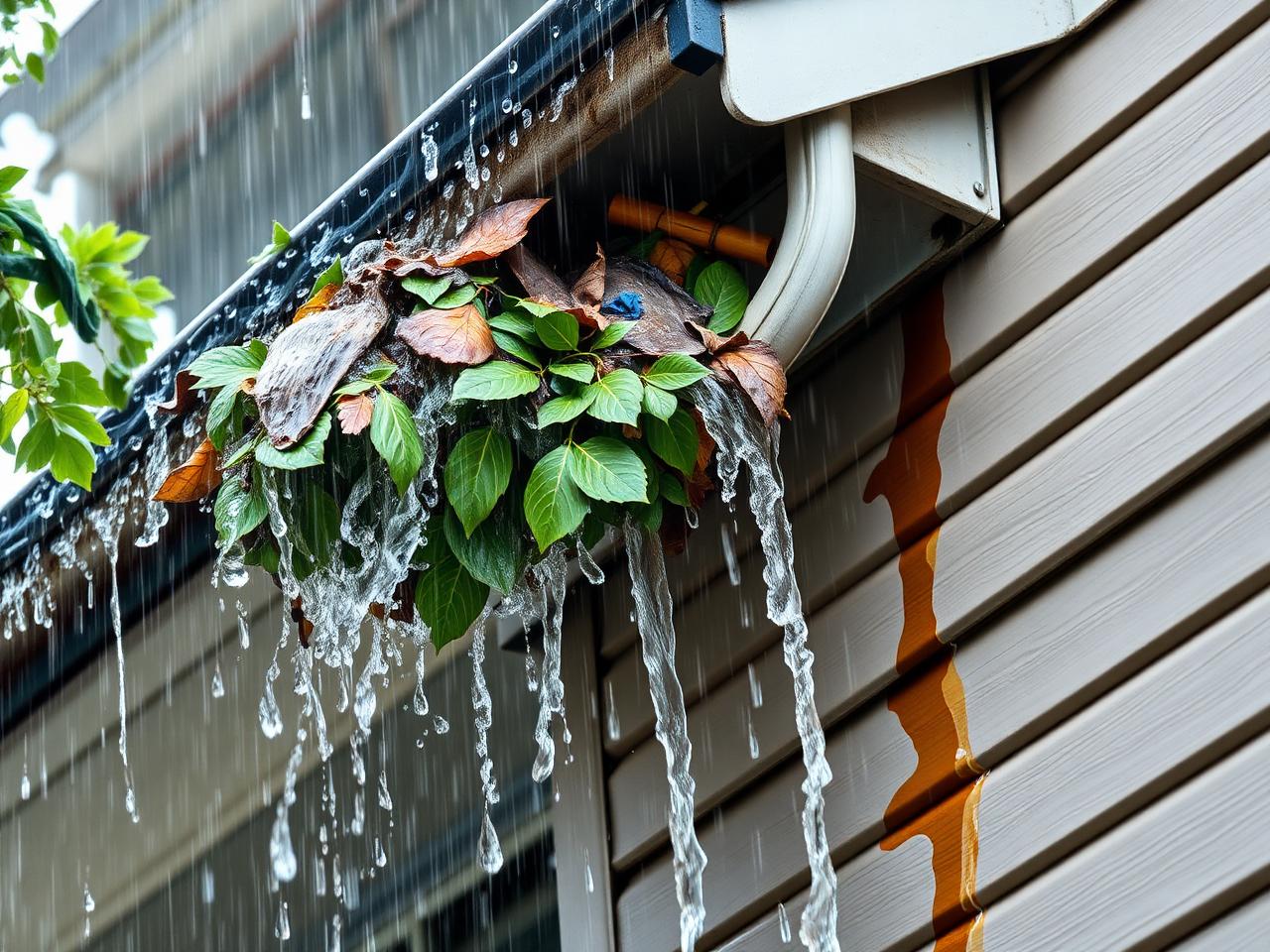
While everyone watches the ground-level drama unfold, catastrophic failures are often happening above their heads. Your building's roofing system is under tremendous stress during Fraser Valley heavy rain events, and failure points at the top can cause massive damage throughout your entire structure.
Flat Roofs: The Weight of Water
Many Chilliwack and Sardis strata buildings feature flat or low-slope roofs. During extreme rainfall, these roofs can accumulate dangerous amounts of standing water (called "ponding"). A single square foot of water one inch deep weighs over 5 pounds. Multiply that across hundreds of square feet, and you're talking about tons of additional weight stressing your building's structure.
🚨 Emergency Warning Signs:
- Water pooling more than 2 inches deep on flat roofs
- Sagging or "bowing" of the roof membrane
- Water leaking from ceiling fixtures in top-floor units
- Cracking sounds from the ceiling structure
If you observe any of these signs, evacuate top-floor units immediately and call emergency services.
The critical vulnerability: A single clogged roof drain can compromise your entire roof system. When that drain becomes blocked (usually with leaves, moss, or debris), water has nowhere to go. The membrane begins to fail, and suddenly you have water pouring into the units below.
Clogged Gutters & Downspouts: The Cascade Effect
Don't just think "clogged gutters are annoying." Let me paint the picture of what actually happens:
Heavy rain fills the gutter faster than it can drain. The gutter overflows, but not outward — it overflows behind the gutter fascia, directly onto your building's siding and wall assembly. This water cascades down the exterior wall, soaking into any small gap or crack in the building envelope. Within hours, you have water infiltrating your wall cavities, leading to hidden mold growth and structural rot that won't be discovered for months or years.
I've seen $75,000+ remediation projects in Chilliwack strata buildings that started with nothing more than a clogged downspout that went unnoticed for a single season.
Visual inspection checklist for gutters:
- Look for water overflowing from gutter edges during rain
- Check for dark "waterfall" stains on siding below gutters
- Observe downspout discharge — is water flowing freely or backing up?
- Look for gutters sagging or pulling away from the fascia (indicates weight from debris/water)
Balcony Drains: The Forgotten Failure Point
Individual unit balcony drains are one of the most commonly overlooked elements in strata maintenance across the Fraser Valley. These small floor drains are easily clogged by leaves, dirt, and even cigarette butts. When they fail during heavy rain, water backs up against the balcony door and building envelope.
This often causes water infiltration into the unit directly below the balcony. The water damage appears as ceiling stains, peeling paint, or — in worst cases — water actively dripping from light fixtures. By the time it's visible, the damage is already extensive. For comprehensive restoration services when this happens, see our Water Damage Restoration page.
3. The Hidden Culprit: Saturated Ground & Perimeter Drains
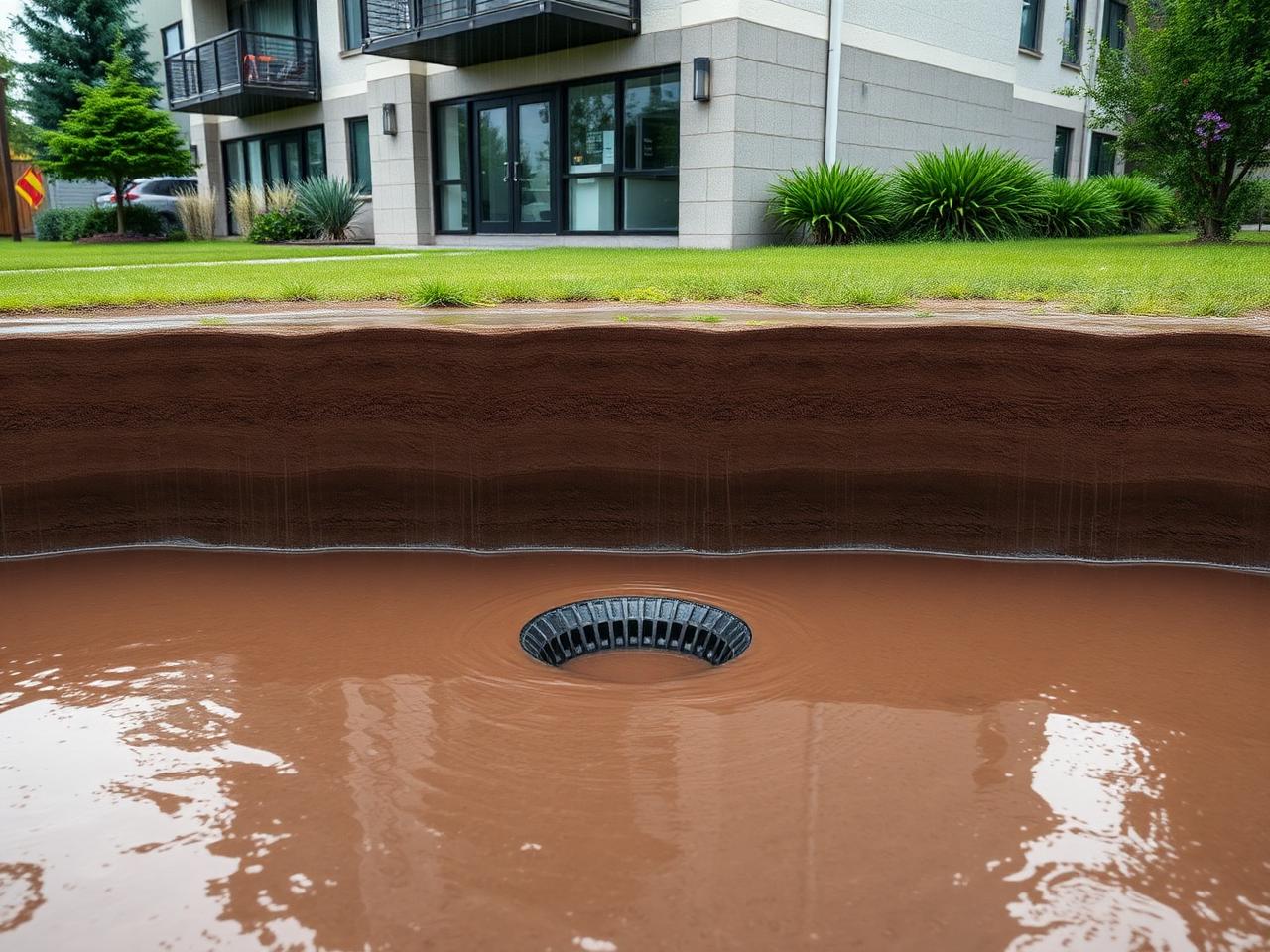
This is where I show you the expert-level thinking that separates proactive strata management from reactive crisis management. Most property managers understand surface drainage — gutters, drains, sump pumps. But few truly understand what's happening underground during extreme Fraser Valley rainfall events.
Understanding Hydrostatic Pressure
Imagine your building's foundation surrounded by soil. Under normal conditions, that soil drains water away through your perimeter drainage system. But during prolonged heavy rain in Chilliwack, something critical happens: the ground becomes completely saturated — essentially turning into a "saturated sponge."
This saturated soil now exerts what we call hydrostatic pressure against your foundation walls. Think of it like a massive wet sponge being squeezed against your basement or crawlspace. The water has to go somewhere, and if your perimeter drains can't handle the volume, that water finds its way through any foundation crack, expansion joint, or construction seam.
Why this is particularly critical in Chilliwack and the Fraser Valley:
- Clay-heavy Fraser Valley soil has poor natural drainage
- Many older strata buildings have aging perimeter drain systems
- Tree roots commonly infiltrate and block underground drains
- Silt accumulation over decades reduces drain capacity by 50%+
Perimeter Drains: Your Underground Defense System
Your building's perimeter drainage system consists of underground pipes (usually perforated weeping tile) installed around the foundation footings. When functioning properly, these drains collect groundwater and direct it away from your building to storm sewers or drainage fields.
The problem: These systems age, clog, and fail. Silt infiltrates the perforations. Tree roots grow into the pipes. The pipes themselves can collapse or separate. And because they're underground, you don't know there's a problem until water appears inside your building.
Surface-level warning signs of perimeter drain failure:
- Significant pooling: Large "ponds" of water forming against your foundation during rain
- Persistently soggy soil: Ground that remains saturated days after rain stops
- Foundation plantings drowning: Shrubs near the building showing signs of root rot
- Basement/crawlspace moisture: Musty odors, efflorescence (white mineral deposits), or visible water seepage
- Cracks in foundation walls: New or expanding cracks (indicating pressure from water-saturated soil)
If you observe multiple signs of perimeter drain failure, this is not a maintenance issue you can defer. Compromised foundations lead to structural damage costing $100,000+ to repair. For more on preventing these issues, read our guide on Strata Property Water Damage Prevention.
Catch Basins in Common Areas: The "Geyser Effect"
Here's a phenomenon I've seen dozens of times during extreme rain events in Chilliwack strata properties: courtyard catch basins that start "bubbling up" or creating a "geyser effect" — water and debris shooting upward from the drain.
This happens when the municipal storm drain system becomes overwhelmed. Instead of your building's water draining away, the city system backs up and pushes water backward through your drains. This can flood courtyards, landscaped areas, and even force water into ground-level units.
There's nothing your maintenance team can do to prevent this (it's a municipal infrastructure issue), but you need to be aware it's happening so you can direct water away from building entry points and notify residents of potential flooding.
4. Building Envelope Weak Points: Windows, Doors, and Siding
Your building's envelope — the outer shell that separates interior from exterior — is designed to shed water. But it's not designed to be waterproof under extreme conditions. Heavy, wind-driven rain exploits every pre-existing weakness in your building envelope, turning minor maintenance deficiencies into major water intrusion emergencies.
How Wind-Driven Rain Changes Everything
Normal rainfall falls vertically and is shed by your building's overhangs, siding laps, and drainage planes. But during Fraser Valley storm events with high winds, rain is driven horizontally against your building at tremendous force. This wind-driven rain can:
- Force water behind siding through nail holes and seams
- Push water through failed window and door caulking
- Enter through cracks in stucco or masonry
- Infiltrate through deteriorated flashing around roof penetrations
Critical inspection points for building envelope:
- Window perimeters: Look for failed caulking (cracked, shrunk, or missing). Check for water stains on interior window sills
- Door frames: Inspect weather-stripping and threshold seals. Look for daylight gaps around door frames
- Stucco and siding: Check for cracks, chips, or areas where siding has pulled away from the building
- Expansion joints: Ensure joints are properly sealed (common failure point between building sections)
- Roof penetrations: Examine flashing around vents, chimneys, and mechanical equipment
The insidious nature of building envelope failure: Water intrusion often goes undetected for months or years. The water infiltrates your wall cavity where it cannot be seen. By the time you observe interior damage (stains, peeling paint, mold growth), you already have significant hidden damage within your walls.
This is why preventive maintenance and regular building envelope inspections are critical for Chilliwack strata properties. Small repairs today prevent catastrophic remediation projects tomorrow. Understanding Emergency Response Programs can help you prepare for these scenarios.
A Proactive Inspection Checklist for Strata Managers

Use this actionable checklist during extreme weather events. Print it out, grab your rain gear and flashlight, and conduct a systematic inspection of your Chilliwack or Fraser Valley strata property.
Parkade & Lower Levels
- ✅ Walk the parkade: Listen for the sump pump. It should be cycling regularly during heavy rain
- ✅ Check all parkade floor drains: Clear any visible blockages. Water should drain within seconds
- ✅ Inspect the parkade entrance ramp: Look for water pooling or "waterfalling" over curbs
- ✅ Examine electrical rooms and mechanical rooms: Ensure no water infiltration near critical systems
- ✅ Check ground-level unit entry points: Look for water pooling against patio doors or window wells
Roof & Upper Building
- ✅ Access the roof if safe to do so: Check for water ponding deeper than 1 inch
- ✅ Inspect roof drains: Ensure they're clear of debris and water is flowing freely
- ✅ Scan the soffits from ground level: Look for dark, wet patches or water dripping (indicates gutter or roof leak above)
- ✅ Check top-floor units for ceiling leaks: Ask residents to report any water stains or dripping
- ✅ Inspect balcony drains: Ensure they're clear and water isn't backing up against doors
Perimeter & Foundation
- ✅ Patrol the perimeter: Look for significant "pooling" or "ponds" of water against the foundation
- ✅ Check common area catch basins: Ensure all courtyard and landscape drains are clear of leaves and debris
- ✅ Observe drainage patterns: Water should be flowing away from the building, not toward it
- ✅ Inspect the crawlspace if accessible: Use a flashlight to check for standing water or moisture
- ✅ Look for "geyser" or "bubbling" drains: This indicates storm system backup
Building Envelope
- ✅ Check gutters for overflow: Look for water cascading behind the gutter onto siding
- ✅ Inspect downspout discharge: Ensure downspouts are directing water away from the foundation
- ✅ Look for water intrusion at windows and doors: Check for water stains on interior sills
- ✅ Examine siding and stucco: Look for areas where water is penetrating through cracks
- ✅ Check common area walls for moisture: Feel walls for dampness in high-risk areas
Document your findings with photos and notes. This creates a valuable record for insurance purposes and helps you track recurring issues that need permanent solutions.
What to Do in an Emergency: 3 Immediate Steps
If you discover active water intrusion or flooding during your inspection, follow these three critical steps immediately:
Step 1: Safety First
Before taking any action, ensure human safety:
- ⚠ Do not enter flooded electrical rooms or any area with standing water near electrical panels or equipment
- ⚠ Do not enter parkades with significant standing water until you've confirmed no electrical hazards
- ⚠ Evacuate affected units if water is actively infiltrating living spaces or structural integrity is compromised
- ⚠ Turn off electricity to affected areas if safe to do so (call an electrician if uncertain)
Step 2: Call for Professional Help
Contact your emergency restoration partner immediately. Every hour of delay increases damage exponentially:
- 📞 24/7 Emergency Response: Call iRPro Restoration at (604) 312-3505
- 📍 We serve all of Chilliwack, Sardis, and the Fraser Valley with rapid emergency response
- 🚨 Our team arrives with industrial water extraction, drying equipment, and IICRC-certified expertise
- 📋 We document everything for insurance claims and work directly with adjusters
Why immediate professional response matters: Within 24-48 hours, water damage progresses from a cleanup job to a demolition and reconstruction project. Mold begins growing within 48-72 hours. The longer you wait, the more expensive and disruptive the restoration becomes.
Step 3: Notify Residents and Document
- 📢 Immediate notification: Inform all residents of the situation, especially if water needs to be shut off or areas are hazardous
- 📸 Photo documentation: Take extensive photos and videos of all damage before any cleanup begins (critical for insurance)
- 📝 Incident report: Create a detailed written record of the event, timeline, and all actions taken
- ☎️ Insurance notification: Contact your strata insurance broker within 24 hours to report the claim
For more information on handling emergency situations, read our comprehensive guide: What to Do in the First 30 Minutes After a Pipe Bursts.
Don't Wait for a Disaster — We're Your Partners in Prevention
Over 30 years serving Chilliwack, Sardis, and Fraser Valley strata properties has taught me one undeniable truth: proactive prevention always costs less than reactive emergency response.
A $500 gutter cleaning prevents a $50,000 building envelope failure. A $2,000 sump pump replacement prevents a $75,000 parkade flood restoration. Regular perimeter drain maintenance prevents a $150,000 foundation repair.
As the Fraser Valley's trusted strata maintenance and restoration experts, iRPro Restoration is here to help — whether you need preventive maintenance planning, emergency water damage restoration, or anything in between.
If you see any of these warning signs or are already dealing with an emergency:
- ✓ 24/7 Emergency Response across Chilliwack, Sardis, and the Fraser Valley
- ✓ IICRC-Certified Restoration Experts with 30+ years of strata property experience
- ✓ Direct Insurance Billing — we work with your adjuster to streamline claims
- ✓ Comprehensive Services: Water extraction, structural drying, mold remediation, full reconstruction
Learn more about our comprehensive restoration services: Water Damage Restoration, Emergency Response Programs, and Construction & Reconstruction Services.
Frequently Asked Questions (FAQ)
How often should strata perimeter drains be cleaned in Chilliwack?
We recommend professional perimeter drain inspection and cleaning every 5-7 years for most Fraser Valley strata properties. However, buildings with mature trees nearby, clay-heavy soil, or a history of drainage issues should consider inspection every 3-5 years. Signs that immediate service is needed include persistent foundation dampness, basement moisture, or water pooling against the building during rain. Perimeter drain camera inspections can identify blockages before they cause catastrophic failures.
Who is responsible for a leak from a balcony in a strata?
This often depends on your strata bylaws and the specific cause of the leak. Generally, the strata corporation is responsible for the building envelope (including the balcony structure and waterproofing membrane), while individual owners are responsible for maintaining their balcony drains clear of debris. However, if the leak is caused by negligence (such as an owner ignoring a clogged drain despite warnings), the owner may be liable for resulting damage to units below. We recommend reviewing your strata's bylaws and consulting with your strata manager. In any case, document the damage immediately and contact a restoration professional to prevent further harm while liability is determined.
What's the first sign of a sump pump failure?
The most common early warning sign is either unusual silence when the pump should be running (during or after heavy rain) or a "humming" or "buzzing" sound with no water being discharged. A healthy sump pump should cycle on and off rhythmically during rain, with clear sounds of water being pumped out through the discharge line. Other warning signs include: the pump running continuously without shutting off (indicating it's overwhelmed or the discharge is blocked), water levels in the sump pit rising higher than normal before the pump activates, or visible rust and corrosion on the pump housing. During extreme weather events, check your sump pump hourly. If you detect any concerning sounds or behaviors, call a professional immediately — sump pump failures escalate to parkade flooding within hours.
How quickly does mold start growing after water damage?
Mold spores are present everywhere, but they need moisture to grow. In Fraser Valley conditions with our moderate humidity levels, mold growth typically begins within 48-72 hours after water intrusion. However, under ideal conditions (warm temperatures, high humidity, organic materials like drywall or wood), mold can begin colonizing in as little as 24 hours. This is why immediate professional water extraction and structural drying is critical. Once mold establishes itself, remediation costs escalate dramatically and may require full demolition of affected materials. Our emergency response teams deploy commercial dehumidifiers and air movers to reduce moisture levels below mold growth thresholds within hours of arrival.
Will my insurance cover emergency water damage restoration?
Most strata insurance policies cover sudden and accidental water damage (such as burst pipes, storm damage, or sump pump failures), but coverage varies significantly based on your specific policy and the cause of the damage. Damage from lack of maintenance (such as long-term roof leaks or clogged drains that were ignored) is typically NOT covered. This is why proactive maintenance and immediate response to warning signs is so critical. When you contact iRPro Restoration for emergency service, we document everything thoroughly for insurance purposes and work directly with adjusters. We can often provide direct insurance billing to streamline the claims process. Always notify your insurance broker within 24 hours of discovering damage, and take extensive photos before any cleanup begins. Learn more in our article: Insurance Claims for Strata Property Damage.
What should be included in a strata Emergency Response Program (ERP)?
A comprehensive Emergency Response Program for Fraser Valley strata properties should include: detailed emergency contact information (restoration contractor, plumber, electrician, insurance broker), shut-off valve locations for water, gas, and electricity, building-specific response procedures for common emergencies (flooding, fire, power outage), resident communication protocols, equipment inventory and maintenance schedules (sump pumps, roof drains, etc.), and pre-established contracts with emergency service providers. An ERP ensures that during a crisis, your property manager and council members know exactly what to do, who to call, and how to minimize damage. Properties with documented ERPs consistently experience 40-60% less total damage costs compared to those without plans. Read our complete guide: Why Every Strata Property in Chilliwack Needs an Emergency Response Program.
Related Articles
The Silent Threat: A Fall Water Damage Checklist for Chilliwack Stratas
Discover the 5 most common failure points in strata buildings and actionable steps to prevent catastrophic water damage before winter hits the Fraser Valley.
What to Do in the First 30 Minutes After a Pipe Bursts
Your definitive step-by-step emergency guide for managing burst pipes in multi-unit properties with critical actions for safety and damage control.
Why Every Strata Property Needs an Emergency Response Program
Learn how implementing a comprehensive Emergency Response Program protects your property, minimizes costs, and ensures rapid recovery when disaster strikes.
Strata Property Water Damage: Prevention and Response Guide
Essential reading for strata councils and property managers on preventing water damage and responding immediately when damage occurs.
About iRPro Restoration Team
The iRPro Restoration Team consists of Triple Master Certified Restorers with over 30 years of combined experience serving strata properties throughout Chilliwack, Sardis, and the Fraser Valley. Our IICRC-certified professionals specialize in emergency water damage restoration, fire and smoke remediation, mold remediation, and complete reconstruction services for multi-unit residential properties.
We understand the unique challenges facing strata property managers and councils in our region, from Fraser Valley weather patterns to building envelope vulnerabilities common in local construction. Our mission is to provide rapid, professional emergency response combined with preventive education to protect strata communities across the Fraser Valley.